






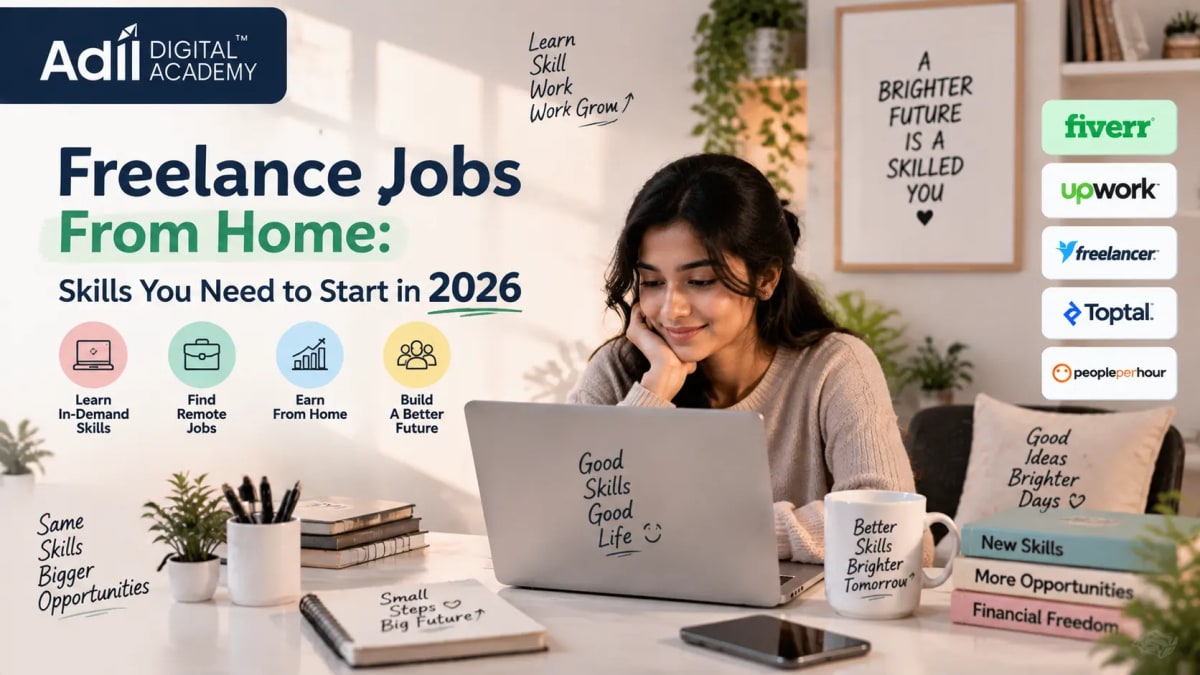
Freelance Jobs From Home: Skills You Need to Start
No morning commute. No need to sit in a traditional office. You can work from your home, manage your schedule, and potentially work with clients from different parts of the world.
That is one reason freelance jobs from home have become an attractive career option for many people.
But there is something beginners often misunderstand: working from home does not mean making money is easy.
You still need a useful skill, a way to show your work, good communication, and the ability to deliver projects on time. You also need patience because getting your first client may take time.
If you are wondering, “What skill should I learn?”, “Where can I find freelance work?” or “Can I start freelancing from home as a beginner?”—this guide is for you.
In this article, we will look at what freelance jobs from home actually involve, which skills you can learn, where to find clients, how to build a portfolio, and how to gradually develop a freelance career.
What Are Freelance Jobs From Home?
In simple terms, freelance jobs from home are remote work opportunities where you provide a specific service or skill to clients without being a permanent employee of a traditional office.
You may work on a single project, handle specific tasks, or provide ongoing services to a client.
Depending on the type of work, freelancers may be paid hourly, per project, or on a monthly basis.
Some common freelance jobs you can do from home include:
- Virtual assistance
- Content writing
- Graphic design
- Video editing
- Social media management
- SEO
- Web development
- Customer support
- Data entry
- Email marketing
- Translation
So, freelancing is not one specific profession. It is a way of offering your skills and services to clients.
Why Are Freelance Jobs From Home Becoming Popular?
One of the biggest advantages of freelancing from home is location flexibility.
You can work from your own space and, depending on your service and client requirements, work with clients outside your local area.
There are several other benefits as well.
Flexible Working Hours
Many freelance projects are based more on deadlines and deliverables than on traditional office hours. However, you may still need to attend meetings or work according to a client's time zone.
Access to Different Clients
Instead of working with only one employer, freelancers can work with different businesses and clients. This can expose you to different projects and workflows.
Build a Career Around Your Skills
If you are good at Canva, you can offer graphic design services. If you enjoy writing, you can offer content writing. If you are organized and communicate well, virtual assistance may be an option.
Opportunity to Develop Over Time
Someone may start with basic data entry and later move into virtual assistance, social media management, project coordination, or digital marketing.
However, freelancing also has challenges. Income may not always be fixed, especially when you are starting out. That is why having realistic expectations is important.
What Skills Do You Need for Freelance Jobs From Home?
This is probably the biggest question for anyone considering freelancing.
There are several skills that are useful across different freelance careers.
1. Virtual Assistance
Virtual assistance is a common service category for freelancers.
A Virtual Assistant helps clients with administrative and day-to-day business tasks.
Typical responsibilities may include:
Email management- Calendar management
- Data entry
- Online research
- File organization
- Customer support
- Appointment scheduling
- Basic reporting
For this type of work, communication, organization, attention to detail, and time management are particularly important.
If you enjoy keeping things organized and learning new tools, virtual assistance can be a practical starting point.
2. Content Writing
If you enjoy writing, content writing can be another option for freelance work.
Freelance writers may create:
Blog posts- Website content
- Product descriptions
- Social media captions
- Email content
- Articles
- YouTube scripts
However, being a good writer today involves more than grammar.
Research skills, audience understanding, basic SEO knowledge, editing, and the ability to follow a client's brand voice can make your service more valuable.
AI tools can also speed up parts of the writing process, but reviewing, fact-checking, editing, and customizing content still require human judgment.
3. Graphic Design
Almost every type of business needs visual content in some form.
Freelance graphic designers may create:
- Social media posts
- YouTube thumbnails
- Presentations
- Posters
- Banners
- Brochures
- Basic branding materials
Beginners can start by learning simpler design tools such as Canva. As their skills develop, they can move into professional tools such as Photoshop or Illustrator when necessary.
Knowing how to use a design tool is only part of the job. Understanding layout, typography, color, spacing, and visual hierarchy is equally important.
4. Video Editing
Video content has become an important part of online marketing and content creation, making video editing another useful freelance skill.
Freelance video editors may work on:
- Reels
- YouTube Shorts
- YouTube videos
- Promotional videos
- Subtitles
- Basic motion graphics
- Videos for different social media formats
Beginners can practice using mobile editing tools. However, more advanced and professional projects may require a computer and professional editing software.
5. Social Media Management
Many small businesses need help managing their social media accounts and keeping their online presence active.
A freelance social media manager may handle:
- Content planning
- Caption writing
- Post scheduling
- Basic graphic creation
- Community management
- Comment monitoring
- Performance reporting
Simply knowing how to use Facebook or Instagram is not enough.
You also need to understand the audience, content strategy, basic analytics, and how different types of content can support a business goal.
6. SEO
Search Engine Optimization, or SEO, is another skill that can be offered as a freelance service.
Freelance SEO work may include:
- Keyword research
- On-page SEO
- Content optimization
- Internal linking
- Basic technical SEO
- SEO audits
- Competitor research
SEO takes time to learn because search engines and SEO practices continue to evolve.
So, completing one course does not mean your SEO learning is finished. Continuous learning is part of working in this field.
7. Web Development
If you are interested in technology and coding, web development can offer a wide range of freelance opportunities.
Freelancers may work on:
- WordPress websites
- Business websites
- Landing pages
- E-commerce websites
- Website maintenance
- Front-end development
- Back-end development
Compared with some beginner-level freelance skills, web development can take longer to learn. However, developing strong technical skills can open opportunities for more complex projects.
8. Data Entry
Data entry is one of the most commonly discussed freelance categories.
Tasks may include:
- Spreadsheet updates
- Information collection
- Data formatting
- PDF-to-spreadsheet conversion
- Database updates
- Basic web research
Accuracy is especially important here.
When entering hundreds of records into a spreadsheet, even a small mistake can create problems for the client.
9. Customer Support
If you communicate well and enjoy helping people solve problems, remote customer support can be another freelance option.
Tasks may include:
- Live chat support
- Email support
- Customer inquiries
- Order-related communication
- Basic troubleshooting
Patience, professional communication, and the ability to understand problems quickly are important for this type of work.
10. Email Marketing
Businesses use email marketing to communicate with customers and subscribers.
A freelance email marketer may work on:
- Newsletter creation
- Email copywriting
- Campaign setup
- Email list management
- Basic performance reporting
Writing ability is useful, but understanding marketing and the target audience can make your service more effective.
Why Are Soft Skills Important for Freelancers?
Many beginners think freelancing is mostly about technical skills.
Technical skills are important, but soft skills can have a major impact on your client relationships.
Communication
You need to understand client requirements and clearly communicate your progress, questions, and concerns.
Time Management
Meeting deadlines is one of the basic expectations of professional freelance work.
Problem-Solving
Problems will happen. A good freelancer does not immediately stop when something goes wrong but tries to find a practical solution.
Adaptability
Different clients may use different tools and workflows. Being willing to learn new systems can make it easier to work with different clients.
Professionalism
Responding professionally, meeting agreed deadlines, following project requirements, and communicating early when there is a problem can make a major difference.
How Important Is English for Freelancing?
If you want to work with international clients, English communication can be very useful.
However, you do not need to speak or write perfect English from day one.
Focus on being able to:
- Understand client instructions
- Write clear messages
- Ask relevant questions
- Explain project progress
- Maintain a professional tone
In many situations, simple and clear English is better than complicated vocabulary.
Where Can You Find Freelance Jobs From Home?
There are several freelance marketplaces and professional platforms where you can look for remote work.
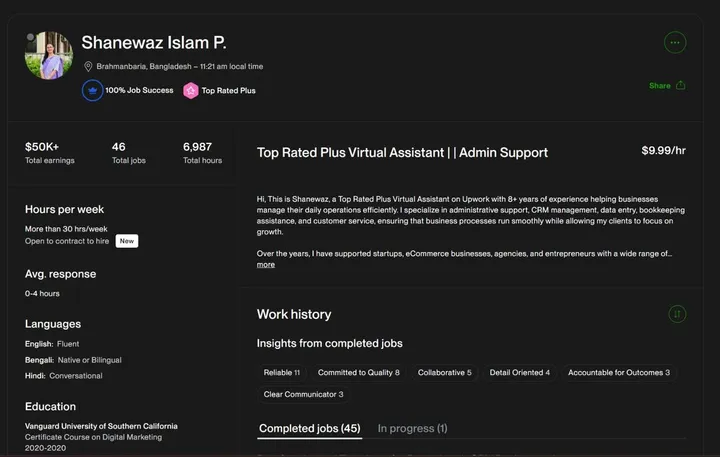
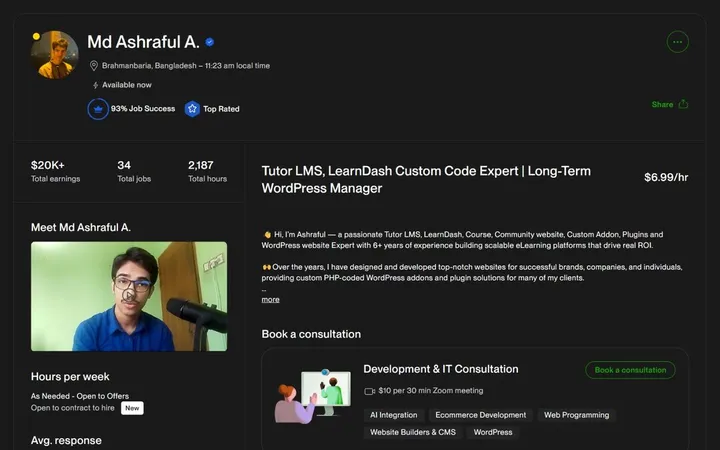
Upwork
Upwork allows freelancers to create profiles and apply for relevant job posts by submitting proposals.
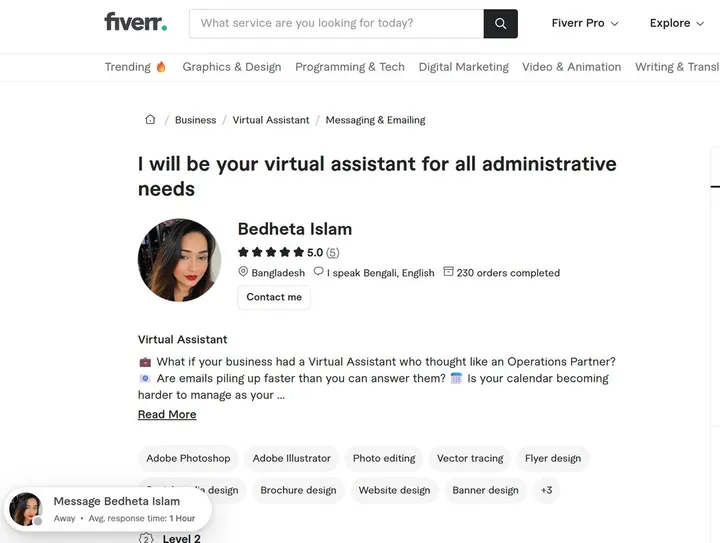
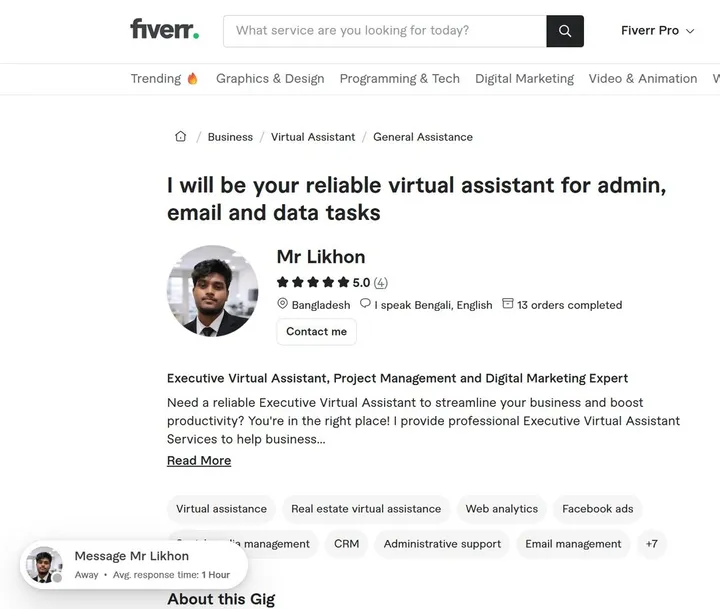
Fiverr
On Fiverr, freelancers can create service listings called Gigs that potential buyers can discover and order.
Freelancer.com
Freelancers can find different projects and submit bids or proposals.
PeoplePerHour
Freelancers can connect with clients through proposals and predefined service offers.
LinkedIn is not a traditional freelance marketplace, but it can be useful for professional networking, personal branding, and direct client outreach.
When choosing a platform, do not focus only on popularity. Check whether the platform actually has relevant opportunities for your specific skill.
What Do You Need to Start Freelancing From Home?
You do not necessarily need a huge investment to begin.
Depending on your type of work, you may need:
A reliable computer or compatible device- Stable internet
- Required software or tools
- A professional email address
- A portfolio
- A freelancing profile
- A suitable payment method
The equipment you need depends heavily on your service.
For example, basic content writing may not require a high-end computer. Professional video editing or software development, however, may require a more powerful machine.
What If You Don't Have a Portfolio?
This is one of the most common problems beginners face.
If you have never worked with a client, what can you put in your portfolio?
The answer is simple: create sample projects.
Suppose you want to become a social media manager.
You could choose an imaginary clothing brand and create:
A 7-day content calendar- Five social media posts
- Five captions
- A simple performance report
Similarly, if you want to become a content writer, you can create two or three high-quality sample articles.
The purpose of a portfolio is to show potential clients what you are capable of doing.
How Can You Get Your First Freelance Client?
Getting the first client can feel intimidating.
You may wonder, “Why would someone hire me when I have no experience?”
That is normal.
Start with a few practical steps:
Complete your professional profile.- Create relevant portfolio samples.
- Look for small and realistic projects.
- Read the client's requirements carefully.
- Write personalized proposals.
- Communicate professionally.
- Deliver work according to the agreed deadline.
Your first project does not have to be huge.
It can help you gain experience, feedback, and a stronger portfolio.
What Does a Good Freelance Proposal Look Like?
A proposal does not need to be extremely long.
Instead, show that you understand the client's requirement and explain how you can help.
For example:
Hi, I noticed that you need help managing your social media content. I can create a weekly content calendar, write captions, and prepare simple Canva designs based on your brand style. I’ve attached a few relevant samples below.
You can then ask a relevant question or mention the next step.
Instead of copying your entire career history into every proposal, focus on the client's actual needs.
Common Mistakes Beginners Make in Freelancing
Focusing Only on Income
Many beginners start by asking, “How much can I earn?”
Income is important, but building a useful skill and learning how to deliver value should come first.
Trying to Learn Everything at Once
SEO today, graphic design tomorrow, and video editing the next day may sound productive, but constantly switching between skills can make it difficult to build a strong foundation.
Looking for Clients Without a Portfolio
Clients may want to see examples of your work. Create samples before you start applying seriously.
Using Someone Else's Work
Never present another person's work as your own. Create your own samples instead.
Working at Extremely Low Rates for Too Long
Competitive pricing can make sense when you're starting. But as your skills and experience grow, review your pricing and service scope.
Sending the Same Proposal Everywhere
Read the job description before applying. A proposal that addresses the client's actual needs will usually be more useful than a generic message.
How Can AI Help With Freelancing?
In 2026, AI tools have become an important part of many freelance workflows.
Depending on the service, AI can help with:
Initial research- Generating content ideas
- Creating drafts
- Organizing meeting notes
- Basic data analysis
- Social media ideas
- Repetitive tasks
However, AI-generated output should not automatically be sent to a client without review.
Fact-checking, editing, quality control, and customizing the output to the client's requirements still matter.
Think of AI as a productivity tool, not a replacement for professional judgment.
How Much Can You Earn From Freelancing?
There is no single fixed answer.
A freelancer's income can depend on:
Skill level- Experience
- Type of service
- Client location
- Number of clients
- Working hours
- Pricing
- Portfolio
- Communication skills
A new freelancer may earn little or have inconsistent income at the beginning. As skills, experience, repeat clients, and service quality improve, earning potential can change.
That is why promises such as “Make $1,000 in seven days” or “Guaranteed income in one month” should be treated carefully.
Freelancing is a career path, not a shortcut to easy money.
How Can You Grow Your Freelance Career?
Start with one skill.
Then gradually move through this process:
Skill → Portfolio → First Client → Experience → Better Portfolio → Better Clients → Higher-Value Services
For example, a Virtual Assistant might begin with data entry and email management. Later, they may learn social media management, project coordination, or automation and offer those as additional services.
This approach allows you to build on an existing foundation rather than starting from zero every time.
How Can You Stay Productive While Working From Home?
Working from home gives you flexibility, but it can also create distractions.
Here are a few practical habits that can help.
Set a Work Schedule
Decide when you will work and try to follow that routine consistently.
Create a Task List
Write down the most important tasks for the day and work through them systematically.
Control Notifications
Turn off unnecessary notifications while working.
Create a Dedicated Work Area
If possible, keep a specific area of your home for work. This can help separate work time from personal time.
Take Regular Breaks
Avoid working continuously for long periods. Short breaks can help you reset and maintain focus.
A 30-Day Roadmap to Start Freelancing From Home
Week 1: Choose a Skill
Look at your interests, current abilities, and the type of work you want to do. Select one skill to focus on.
Week 2: Learn and Practice
Spend time learning the basics and immediately practice what you learn.
Week 3: Build Your Portfolio
Create at least three relevant sample projects.
Week 4: Build Your Profile and Start Client Hunting
Create a professional profile on a suitable freelancing platform and begin applying for relevant opportunities.
You will not become an expert in 30 days. But you can build a foundation, create initial samples, and start moving in a clear direction.
What Should You Keep in Mind Before Starting Freelancing?
You do not have to wait until everything is perfect.
Your first portfolio may not be amazing. Your English may not be perfect. Your first proposal may not receive a response.
That is part of the learning process.
Before you start, make sure you:
Have a specific skill to work on- Create relevant samples
- Practice client communication
- Understand the platform's rules
- Set realistic pricing expectations
- Spend consistent time learning and looking for clients
Most importantly, do not try to do everything at once.
Choose one direction and build from there.
Freelance jobs from home can be a practical way to build a remote career, but success rarely happens overnight.
Instead of worrying about making a large income immediately, focus on building one useful skill. Practice it, create sample projects, develop a portfolio, and learn how to communicate professionally with clients.
Your first project may be small. Your first proposal may get ignored. Your first client may ask for revisions.
That is all part of gaining experience.
Over time, each project can help you improve your skills, strengthen your portfolio, understand clients better, and move toward higher-value opportunities.
The goal is not simply to find a way to work from home. The real goal is to become someone clients can trust to solve a problem and deliver quality work on time.Start with one skill, take one step at a time, and build your freelance career gradually.
Frequently Asked Questions About Freelance Jobs From Home
1. Can I really do freelance jobs from home?
Yes. Many freelance services, including content writing, graphic design, virtual assistance, SEO, video editing, social media management, web development, and customer support, can be performed remotely. The equipment you need depends on the type of work.
2. Do I need a degree to start freelancing?
Not every freelance job requires a specific degree. In many cases, clients care about your skills, portfolio, communication, and ability to deliver the work. However, specialized professions may require relevant education or qualifications.
3. What is the best freelance skill for beginners?
Virtual assistance, content writing, social media management, basic graphic design, data entry, and customer support can be potential starting points. The right choice depends on your interests, abilities, and the type of work you want to pursue.
4. Do I need a laptop to freelance from home?
Not for every single task. Some basic work can be done using a smartphone or tablet. However, for regular professional freelancing, a reliable laptop or desktop can provide much more flexibility, particularly for video editing, web development, and complex projects.
5. How can I get my first freelance client?
Start by building a professional profile and a small portfolio. Then search for projects that match your skills and send personalized proposals. Taking smaller, realistic projects at the beginning can help you build experience and credibility.
6. How much can I earn from freelance jobs from home?
There is no fixed income level. Earnings can vary based on your skill, experience, service type, pricing, number of clients, and working hours. It is better to focus on building skills and a sustainable client base rather than expecting a guaranteed amount.
7. Can I freelance if my English is not perfect?
Yes. However, basic English communication is important if you want to work with international clients. You do not need complicated vocabulary. Being able to understand instructions and communicate clearly and professionally is more important.
8. Will AI reduce freelance jobs?
AI is changing the way many freelance tasks are performed. It can automate or speed up certain repetitive activities, while also creating opportunities for AI-assisted services. Freelancers who combine AI tools with research, editing, communication, and problem-solving skills can adapt to changing workflows.
9. How many hours a day do I need to freelance?
There is no universal number. Some freelancers work part-time, while others work full-time. Your schedule will depend on your clients, project deadlines, and personal goals.
10. What is the most important thing when starting freelancing?
Start with a specific skill, build practical portfolio samples, create a professional profile, and consistently look for relevant opportunities. A combination of skill, communication, professionalism, and consistency is more valuable than simply creating an account on a freelancing platform.